About Labric
Built by engineers who have experienced lab data first hand

We started Labric after seeing the same problem everywhere. World-class research labs were running on outdated data infrastructure. Instruments dumping data into scattered spreadsheets. Scientists emailing files to themselves. PhDs spending more time wrangling data than doing science.
As AI becomes central to research, proper data infrastructure isn't just nice to have—it's the bottleneck preventing breakthroughs.

Building the infrastructure research deserves
Caitlin experienced the problem firsthand while building lab data systems from scratch at Swift Solar, a solar cell research company. She saw critical experimental context trapped in paper notebooks, hours of manual data movement via USB drives and email, and custom systems that broke when grad students graduated.
The pattern repeated everywhere: university labs, corporate R&D teams, and national research facilities. Connor had worked on database products at Google and understood what modern data infrastructure could do.
Together, we realized research labs need the same caliber of data systems that scaled tech companies take for granted. Labric was built to solve this.
A platform purpose-built for scientific research
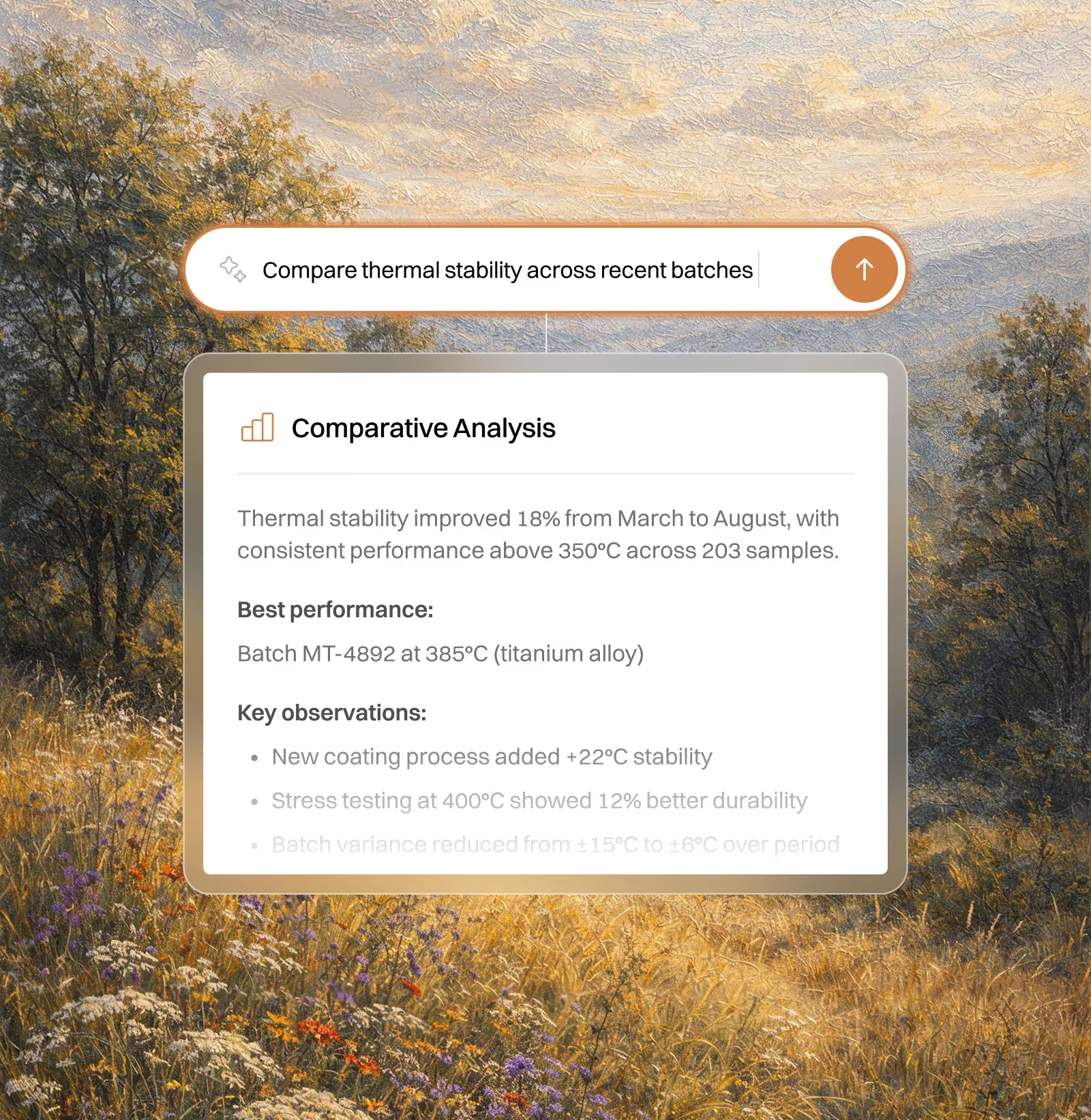
Labric transforms chaotic lab data into structured, AI-ready datasets. We automatically capture data from instruments, organize it into custom databases, and enable powerful analysis.
Automatic instrument data capture
Custom lab-specific databases
Event-driven workflow automation
AI-powered natural language queries
The values that shape everything we build
Scientists first
We build for researchers who use the platform daily, not just the decision makers who buy it.
Speed matters
Research moves fast and infrastructure shouldn't be the bottleneck.
Engineering excellence
We obsess over data correctness, system reliability, and the details that make daily use effortless.
Built with lab experience
We've lived the pain of broken lab data systems and understand what actually works in research.
Leadership
Led by engineers who understand lab workflows



Labric raises $2M to build data infrastructure for scientific research labs
January 15, 2026